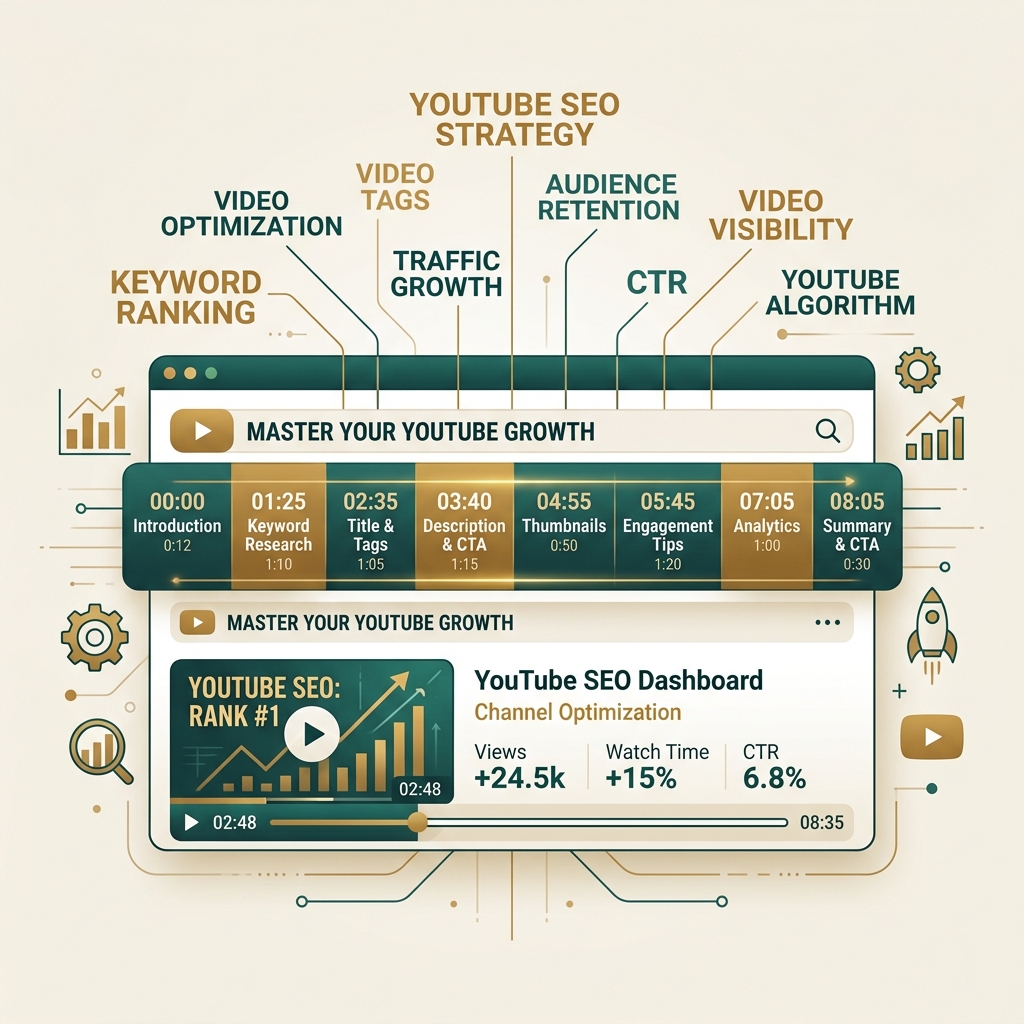
Creating high-quality videos is only half the battle; getting discovered in search results is what drives consistent channel growth.
Using YouTube SEO generators, you can write description tags, target long-tail keywords, and divide long videos into search-optimized chapters automatically.
In this article, we share YouTube SEO secrets and demonstrate how to generate publish-ready metadata in seconds.
Why chapter timestamps matter for search
YouTube chapters help viewers navigate long videos, which directly lifts watch time and retention. More importantly, Google indexes chapters in search results, giving your video multiple entry points for diverse queries.
Auto-generating chapters saves hours of manual timestamping, especially on long documentaries or compilation videos.
YouTube SEO tools compared
Getting discovered on YouTube search requires key metadata. Here is how main platforms rank:
- vidIQ: Outstanding for checking search volume, tracking channel analytics, and analyzing competitors. Generates simple titles, but does not construct chapter timestamps or full descriptions.
- TubeBuddy: Great for A/B testing thumbnails and keyword tags. Highly manual editor.
- Morningfame: Excellent for planning video release structures based on channels of similar sizes, but lacks automated writing tools.
- Jasper / Copy.ai: Flexible AI text generators that can write YouTube descriptions if you feed them the outline, but are not connected to the actual video production tool.
Generate metadata with DreamTuber
DreamTuber's SEO Pack compiles long-tail-aware titles, description texts, tagging lists, and timestamped chapters for every video you render.
This means when your video finishes rendering, all you need to do is copy-paste the generated metadata to complete your upload. The SEO generator parses the actual script and timestamps of the rendered video, ensuring 100% accuracy.
Make one with DreamTuber
One topic in, a finished long-form video out — script, voice, visuals, and render, automatically.
Create your first videoFrequently asked
How many tags should I use?+
Focus on 10-15 highly relevant, long-tail tags rather than stuffing hundreds of unrelated keywords.
Are chapters required for monetization?+
No, but they significantly improve user engagement, which indirectly helps monetization and algorithmic reach.